
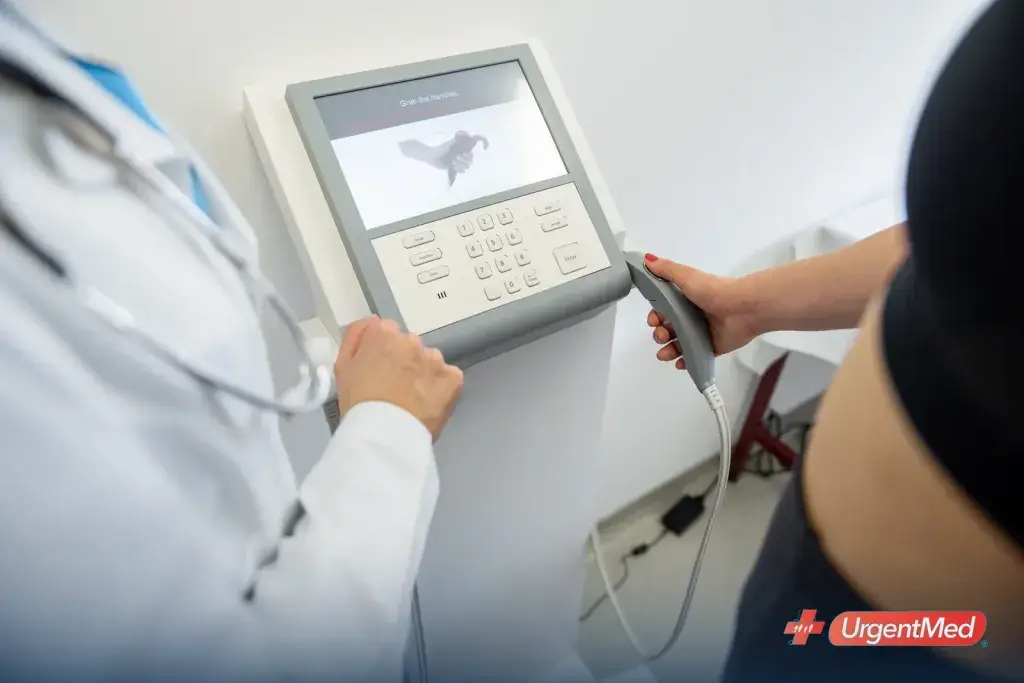
The scale tells you one number. A body composition scan tells you what that number is made of — fat, muscle, water and mineral — and where it sits. UrgentMed uses a bioelectrical impedance (BIA) analyzer at both the Davie and Plantation clinics: it is the baseline and every-follow-up measurement of the medical weight-loss program, and anyone can walk in for a self-pay scan.
What the body composition scan measures
Each scan prints a one-page report. In plain words, it shows:
- Body composition — total body water, protein, mineral (inorganic salt) and body fat mass, each against a normal range for your height, sex and age, with fat-free weight calculated.
- Muscle–fat balance — weight, skeletal muscle mass and body fat mass plotted as under, normal or over the standard, so you can see at a glance whether you are carrying too little muscle, too much fat, or both.
- Body fat percentage, BMI, waist-to-hip fat ratio and subcutaneous fat — the four numbers most programs and physicians ask for.
- Segmental analysis — muscle and fat in each arm, each leg and the trunk, which shows imbalances and where change is happening.
- Visceral fat index — the fat stored around the organs, the component most associated with metabolic risk and the one that responds early to treatment.
- Basal metabolic rate — the calories your body uses at rest, the starting point for any nutrition target.
- Body type classification, body age and a health score — quick summaries of where you stand.
- Weight-control targets — a target weight and how much of the change should come from fat versus muscle.
How a body composition (BIA) scan works
You stand on the analyzer’s platform and hold the hand electrodes for about a minute while it passes a very low-level, imperceptible electrical signal through the body. Fat, muscle and water conduct the signal differently, and the analyzer uses those differences with your height, weight, age and sex to estimate each compartment. There is no radiation and nothing to undress for beyond shoes and socks.
BIA is an estimate rather than a direct measurement, and hydration moves the numbers — which is why preparation matters and why the useful information is the trend across scans done the same way.
How to prepare so the numbers are comparable
- Scan at the same time of day each visit, ideally in the morning, and empty your bladder first.
- No heavy meal for two hours and no alcohol for 24 hours before the scan.
- No hard exercise, sauna or shower immediately before; arrive normally hydrated, not over- or under-hydrated.
- Remove shoes, socks, heavy clothing and metal accessories; do not apply lotion to hands or feet beforehand.
- Tell the staff if you have a pacemaker or other implanted electronic device, or if you are pregnant — the scan is not performed in those cases.
Why composition matters more than the scale
Weight can fall while muscle is being lost and fat retained — the outcome every supervised program is trying to avoid, especially during treatment with semaglutide or tirzepatide. Tracking skeletal muscle and visceral fat separately lets the provider see whether the plan is working the right way and adjust protein intake, activity and, where relevant, medication. The basal metabolic rate anchors realistic calorie guidance instead of a guess.
How the scan is used during supervised treatment
- A baseline scan at your weight-loss consultation, alongside the exam, vital signs and baseline labs.
- A repeat scan at each follow-up visit, done the same way, with the printed reports kept in your chart.
- The provider reviews the trend with you — fat mass, skeletal muscle, visceral fat, water — and adjusts the plan.
- No separate charge for program patients; the scan is part of the visit.
Walk-in body composition scans for anyone
You do not need to be in the program. Athletes tracking a training block, anyone starting a fitness plan, or someone who simply wants a clearer picture than a bathroom scale can walk in at either clinic for a self-pay scan and leave with the printed report. Self-pay pricing is quoted at the front desk. Bring a photo ID; no appointment is needed, though scanning at a consistent time of day gives the best comparisons.
How your provider uses the numbers
The value of a body composition scan is the trend. One reading is a snapshot; a series taken the same way each visit shows whether you are losing fat while holding muscle, which is the question a scale cannot answer. At UrgentMed a provider reads it alongside your examination, vital signs and laboratory results — it tracks change rather than diagnosing a condition, and it is that combination that turns a set of numbers into a plan. Body fat ranges depend on age and sex, so the report prints your own range rather than a one-size-fits-all target.
Walk in at either Broward clinic
Both clinics are open seven days a week — Davie at 5149 S University Drive (Renaissance Plaza, just south of Griffin Road) and Plantation at 10199 Cleary Boulevard, Suite 10. Both serve Davie, Plantation, Cooper City, Weston, Sunrise, Southwest Ranches, Pembroke Pines and the surrounding Broward County communities. Hours, maps and parking.
Insurance and self-pay
The scan is included in weight-loss program visits. Stand-alone scans are self-pay, quoted at the front desk before you are scanned. Bring a photo ID.