
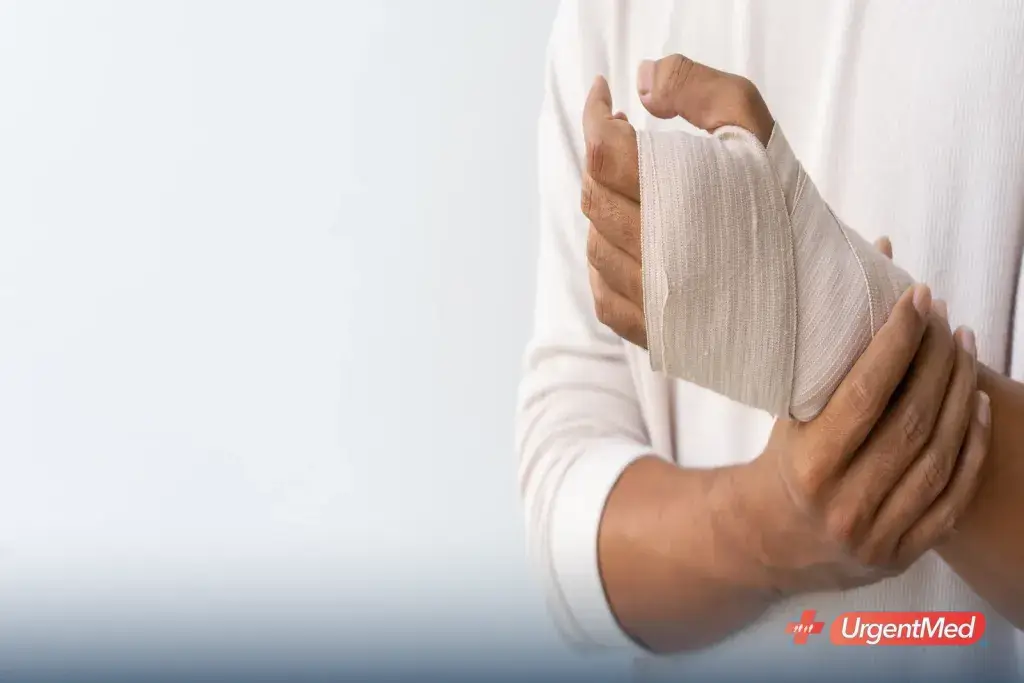
Urgent care wound care in Davie and Plantation, walk in seven days a week: cleaning, dressing changes, infection checks and follow-up for wounds first treated here, in an emergency room, after surgery or at home. A licensed provider examines the wound at every visit, and antibiotics, a tetanus booster or a specialist referral are handled the same day when the wound calls for them.
Does urgent care do wound care? Yes — here is what that covers
Yes. Both UrgentMed clinics treat wounds from the first visit through healing. That covers fresh injuries, wounds that were closed elsewhere and need a check, dressings that need changing by someone who knows what a healing wound should look like, and wounds that have started to look wrong. You do not need a referral, an appointment, or a prior visit here — bring the discharge instructions if the wound was treated somewhere else. Plantation is at 10199 Cleary Boulevard and Davie at 5149 S University Drive, both open every day.
Wounds we care for
- Scrapes, abrasions and road rash that need proper cleaning and dressing.
- Wound checks and dressing changes after emergency-room or surgical care, including removal of stitches or staples placed elsewhere.
- Wounds that are slow to heal, or that look red, warm, swollen or are draining.
- Diabetic foot wounds, leg ulcers and pressure sores that need monitoring and dressing between specialist visits.
- Minor burns after the first day, when a dressing change or a check is needed.
- Wounds from a work injury, handled under workers’ compensation with the employer paperwork completed here.
Wound care clinic or wound care center — what UrgentMed does, and does not do
A hospital wound care center treats chronic, non-healing wounds with specialized therapies such as hyperbaric oxygen, and usually needs a referral and a scheduled appointment. UrgentMed is the walk-in wound care clinic for everything before and around that: acute wounds, routine dressing changes, infection checks, and the follow-up between specialist visits. When a wound is not progressing — a diabetic ulcer that has not improved after several weeks, a wound with exposed bone or tendon — the provider refers you to a wound specialist and sends the records ahead. Continuing care that needs more than a clinic can offer would not be doing you a favor.
What happens at a wound-care visit
- The provider removes the old dressing, cleans the wound, examines and measures it, and photographs it for the chart when that helps track healing.
- Dead or unhealthy tissue is removed when appropriate, and the wound is checked for signs of infection.
- Antibiotics are prescribed the same visit when infection is present; a wound culture is sent when the choice of antibiotic depends on it.
- The wound is dressed with the right material for its stage, and you are shown how to change it at home and what to look for.
- A tetanus booster is given when your record calls for it, a follow-up interval is set, and your physician or specialist is updated on request.
Signs a wound is infected
- Redness that spreads beyond the edges of the wound, or red streaks running from it.
- Increasing pain, warmth or swelling after the first day or two, instead of steady improvement.
- Cloudy, yellow or foul-smelling drainage, or a wound that reopens.
- Fever or chills with any of the above — be seen the same day.
An infected wound is treated at the visit; a painful, swollen lump that is filling with pus is treated as an abscess and drained. MedlinePlus has a plain-language guide to wound care at home.
When a wound needs something else
A fresh cut that is gaping or deep needs stitches or skin glue, ideally within a few hours of the injury — walk in as soon as you can. A deep puncture, a bite, or a wound with something embedded in it is examined and, when needed, X-rayed on site. A wound that has not healed in a month, or any wound in someone with poor circulation, is reviewed for the underlying cause before it becomes a chronic ulcer.
When to go to the emergency room instead
- Bleeding that does not stop with ten minutes of firm pressure.
- Red streaks spreading from the wound, fever with a wound infection, or a rapidly enlarging area of redness.
- A deep puncture to the chest, abdomen, neck or a joint, or a wound with exposed bone or tendon.
Walk in at either Broward clinic
Both clinics are open seven days a week — Davie at 5149 S University Drive (Renaissance Plaza, just south of Griffin Road) and Plantation at 10199 Cleary Boulevard, Suite 10. Both serve Davie, Plantation, Cooper City, Weston, Sunrise, Southwest Ranches, Pembroke Pines and the surrounding Broward County communities. Hours, maps and parking.
Insurance and self-pay
We accept most major insurance plans, workers’ compensation and Florida PIP auto claims, and quote self-pay pricing at the front desk before you are seen. Bring a photo ID and your insurance card.
Sources: MedlinePlus — Wounds and injuries