NFPA Firefighter Physicals in Broward — What the Evaluation Covers and How to Schedule One
A firefighter physical in Florida can mean two documents: the State Fire Marshal’s medical form every fire academy applicant needs, and the NFPA medical evaluation a fire department may require at hire and every year after. This guide covers what the NFPA standard says the evaluation is for, candidate versus annual evaluations, what Florida requires before training, and how to arrange one at UrgentMed.
UrgentMed completes the State Fire Marshal’s Form DFS-K4-1022 and NFPA 1582 candidate and annual evaluations at both clinics — see the firefighter physicals page for what each visit includes.
What the NFPA medical standard is for — and why it is now NFPA 1580
NFPA 1582 is the National Fire Protection Association’s Standard on Comprehensive Occupational Medical Program for Fire Departments. In NFPA’s words, it “outlines an occupational medical program that will reduce risks and provide for the health, safety, and effectiveness of fire fighters operating to protect civilian life and property.”
NFPA has since folded it into a single standard: NFPA 1580, Standard for Emergency Responder Occupational Health and Wellness, current edition 2025. NFPA 1580 consolidates NFPA 1581 (fire department infection control), NFPA 1582 (the occupational medical program), NFPA 1583 (health-related fitness programs) and NFPA 1584 (rehabilitation during emergency operations and training). NFPA’s 1582 page now says its 2022 edition is the last published edition of the standard’s content as a stand-alone standard. Florida’s academy rule still cites NFPA 1582 (2018 Edition), so you may see either number; your form says which applies.
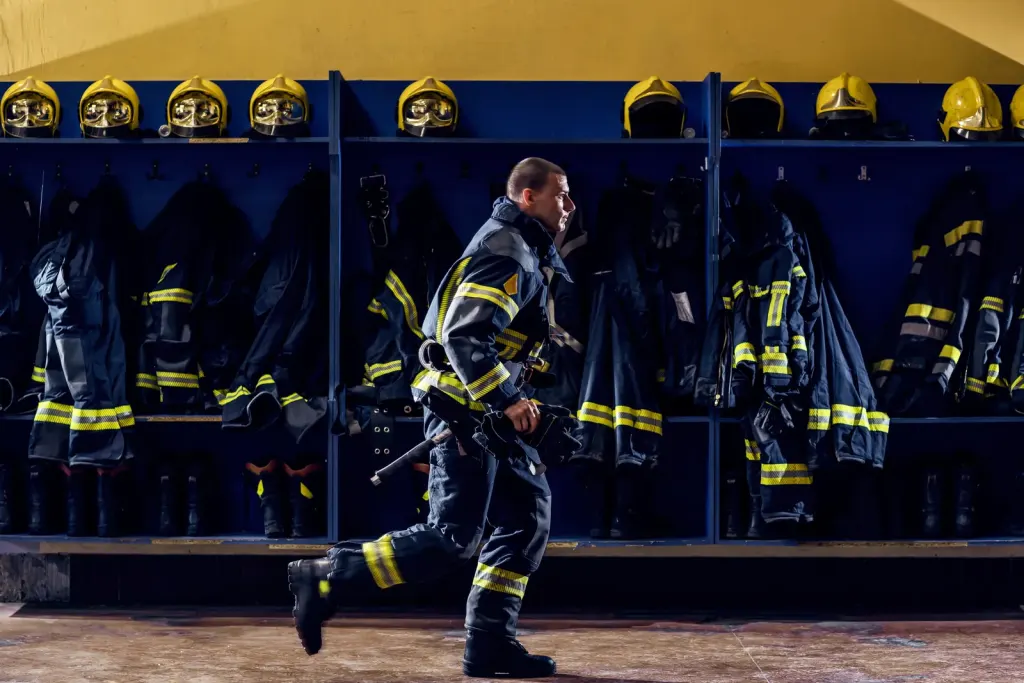
Either way, the evaluation is measured against a firefighter’s essential job tasks. The NFPA 1582 task list printed on Florida’s medical form includes:
- Climbing six or more flights of stairs in fire protective ensemble weighing at least 50 lbs., while carrying another 20 to 40 lbs. of equipment and tools.
- Wearing a self-contained breathing apparatus (SCBA), which requires the ability to tolerate increased respiratory workloads.
- Searching for, finding and rescue-dragging or carrying victims, from newborns up to adults weighing over 200 lbs., in low visibility.
- Working in encapsulating, insulated gear that causes significant fluid loss and can raise core temperature above 102.2°F (39°C).
- Giving and understanding verbal orders while wearing SCBA in high background noise.
The question is whether you can do those tasks safely — the list notes that the sudden incapacitation of one member can put civilians and the rest of the team at risk.
Candidate evaluation or annual evaluation?
Departments that follow NFPA 1582 require a candidate medical evaluation before hire and an annual evaluation afterward. The essential job tasks are the same for both, according to the International Association of Fire Chiefs’ guide to the standard.
- Candidate evaluation (before hire or training). It includes a medical history, an examination and any laboratory tests required to detect conditions that could adversely affect your ability to safely perform the essential job tasks. A condition found at this stage is recorded in one of two categories: Category A, a condition that would preclude a person from performing as a member in a training or emergency operational environment, and Category B, one that could, depending on its severity or degree.
- Annual evaluation (members). NIOSH notes that NFPA 1582 recommends annual medical evaluations of members, and the IAFF/IAFC Wellness-Fitness Initiative calls for a mandatory, non-punitive annual medical evaluation. Its first stated reason: to identify whether individuals are physically and mentally able to perform essential job duties without undue risk of harm.
- Heart checks that start at 40. NIOSH, summarizing NFPA 1582, says that starting at age 40 all firefighters should have an annual resting EKG, and that annual cardiac risk assessment should begin at age 40 for firefighters with no symptoms and no known history of atherosclerotic cardiovascular disease.
The IAFC guide adds that the standard recognizes no difference between volunteer, paid on call, part-time and career firefighters: the tasks are the same. At UrgentMed, volunteer departments, wildland crews and EMT/paramedic programs use their own forms and the same on-site testing.
What the evaluation includes at UrgentMed
UrgentMed’s NFPA evaluation is built around the essential job tasks and typically includes:
- A medical history and a full examination, including vision, hearing and blood pressure.
- A 12-lead EKG, and a cardiac risk assessment appropriate to your age.
- Spirometry (lung function), and a chest X-ray when the department’s schedule calls for one.
- A laboratory panel — CBC, metabolic panel, lipids and urinalysis — drawn on site (see blood work).
- An immunization review and TB testing, with vaccines given at the visit.
- The department’s form, or a medical clearance letter, completed and sent to the fire department’s designated contact.
Your department’s program decides what it requires. The Wellness-Fitness Initiative, which informed NFPA 1582, also lists areas such as body composition, cancer screening, sleep disturbance and occupational stress awareness. Ask your department which areas its program covers and where each is done; the list above is what UrgentMed’s firefighter evaluation includes.
Two things are not the evaluation itself:
- A respirator clearance. Reviewing one department’s exams, NIOSH noted that an exam focused on the ability to safely wear a respirator is not the comprehensive annual medical assessment NFPA recommends. If your department adds a respirator fit test or a drug screen to onboarding, both can be done at the same visit.
- The CPAT. The Candidate Physical Ability Test is run by the academy or the department. The medical clearance is what allows you to take it.
Florida fire academy applicants: section 633.412 and Form DFS-K4-1022
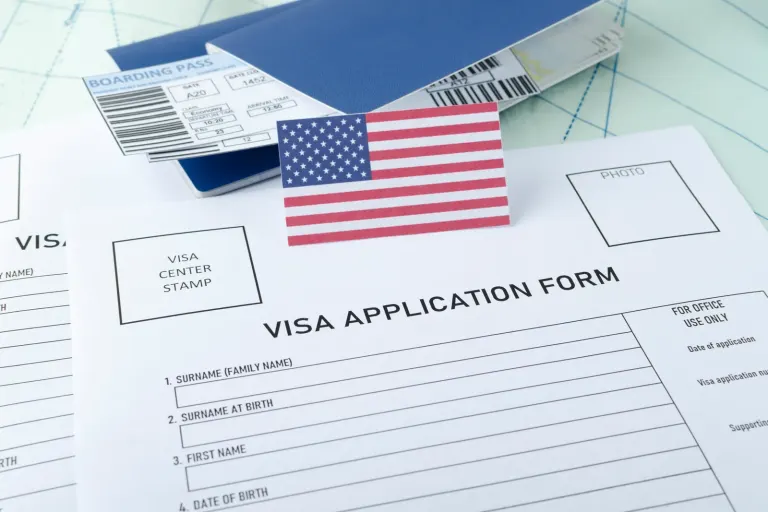
Florida puts the medical requirement in law. Section 633.412(5), Florida Statutes, says a person applying for certification as a firefighter must “be in good physical condition as determined by a medical examination” given by a Florida-licensed physician, surgeon, physician assistant, osteopathic physician or advanced practice registered nurse. The examination “may include, but need not be limited to, the National Fire Protection Association Standard 1582,” and it must be submitted to the Division of State Fire Marshal, on a form set by rule, before you are eligible for admission into a training course.
That form is DFS-K4-1022, Medical Examination to Determine Fitness for Firefighter Training, from the Bureau of Fire Standards and Training. Rule 69A-37.037 of the Florida Administrative Code adds three conditions:
- The examination is based on the essential job tasks and descriptions of a firefighter in Chapter 5 of NFPA 1582 (2018 Edition).
- You must receive it within six months of the scheduled starting date of the program — so schedule it once your start date is set, not long before.
- Without a completed Form DFS-K4-1022, an individual will not be allowed to attend training or test for certification.
The form lists what the examination must include at a minimum: the dermatological, cardiovascular, respiratory, gastrointestinal, endocrine and metabolic, neurological, genitourinary and musculoskeletal systems; a clinical evaluation of a 12-lead EKG; systolic and diastolic blood pressure; ears, eyes, nose, mouth and throat; pure-tone hearing; far visual acuity, corrected or uncorrected; and peripheral vision. The examiner then signs one of two boxes: medically fit to engage in firefighter training, or not medically fit.
The same section also requires applicants to be a nonuser of tobacco or tobacco products for at least one year immediately preceding application, shown by a sworn affidavit. At UrgentMed, bring the form from your academy; the history, examination, vision, hearing and the tests the form lists are completed and signed at the visit.
How to schedule one — for a candidate or a whole department
No appointment is needed: candidates and members walk in at Davie or Plantation.
- On site means at the clinic. The examination, EKG, spirometry, chest X-ray, blood draw and any vaccines are done at the visit, so the whole evaluation usually takes one trip. Laboratory results come back in a few business days, and the form is finalized then.
- For a department. Employer-ordered exams are billed to the employer account, and the completed form or medical clearance letter goes to the fire department’s designated contact. To set up the account, use the request occupational health services form.
- For a candidate paying yourself. Most licensing and program physicals are self-pay, and the price is quoted at the front desk before you are seen. Ask your department or academy first whether it arranges the evaluation.
Bring the form printed, with your sections completed, and a photo ID; the provider completes and signs the medical sections at the visit. Add glasses or contacts, a list of your medications, any cardiology or specialist letters the form asks for, and the contact who should receive the completed form.
On privacy, the IAFC guide quotes NFPA 1582: “No fire department personnel, other than the fire department physician or appropriate medical staff, shall have access to another member’s medical records without the express written consent of that member.”
Chest pain or discomfort, shortness of breath, feeling weak, light-headed or faint, or pain or discomfort in the jaw, neck, back, or one or both arms or shoulders can be signs of a heart attack — during training, a fitness test or at any other time. Call 911 immediately; the evaluation can wait.
Walk in at Davie or Plantation
Both clinics complete firefighter evaluations as walk-in visits — Davie at 5149 S University Drive (Renaissance Plaza, just south of Griffin Road) and Plantation at 10199 Cleary Boulevard, Suite 10 — serving Davie, Plantation, Cooper City, Weston, Sunrise, Southwest Ranches, Pembroke Pines and the surrounding Broward County communities. Check hours, maps and parking before you go.
Sources: NFPA — NFPA 1580, Standard for Emergency Responder Occupational Health and Wellness · NFPA — NFPA 1580 Standard Development · NFPA — NFPA 1582 Standard Development · NIOSH — Fire Fighter Fatality Investigation Report F2023-04 (May 2025) · IAFF/IAFC — The Wellness-Fitness Initiative: Overview and Best-Practice Guidelines (2022) · IAFC — Understanding and Using NFPA 1582 and the IAFF/IAFC Wellness Fitness Initiative · Florida Statutes §633.412 — Firefighters; qualifications for certification (2026) · Florida Administrative Code — Rule 69A-37.037, Firefighter Training Course Medical Examination · Florida Administrative Code — Form DFS-K4-1022, Medical Examination to Determine Fitness for Firefighter Training · CDC — About Heart Attack Symptoms, Risk, and Recovery